
When people hear the term CV, they often think of a Curriculum Vitae—a document that summarizes skills and qualifications. In the energy industry, however, CV stands for Calorific Value, and it plays an equally important role.
Calorific Value is one of the most important characteristics of any fuel. Whether you’re generating electricity, powering industrial equipment, fueling vehicles, or simply cooking at home, calorific value determines how much energy a fuel can provide.
Understanding this concept helps businesses and consumers make informed decisions about fuel efficiency, operating costs, and sustainability.
What Is Calorific Value?
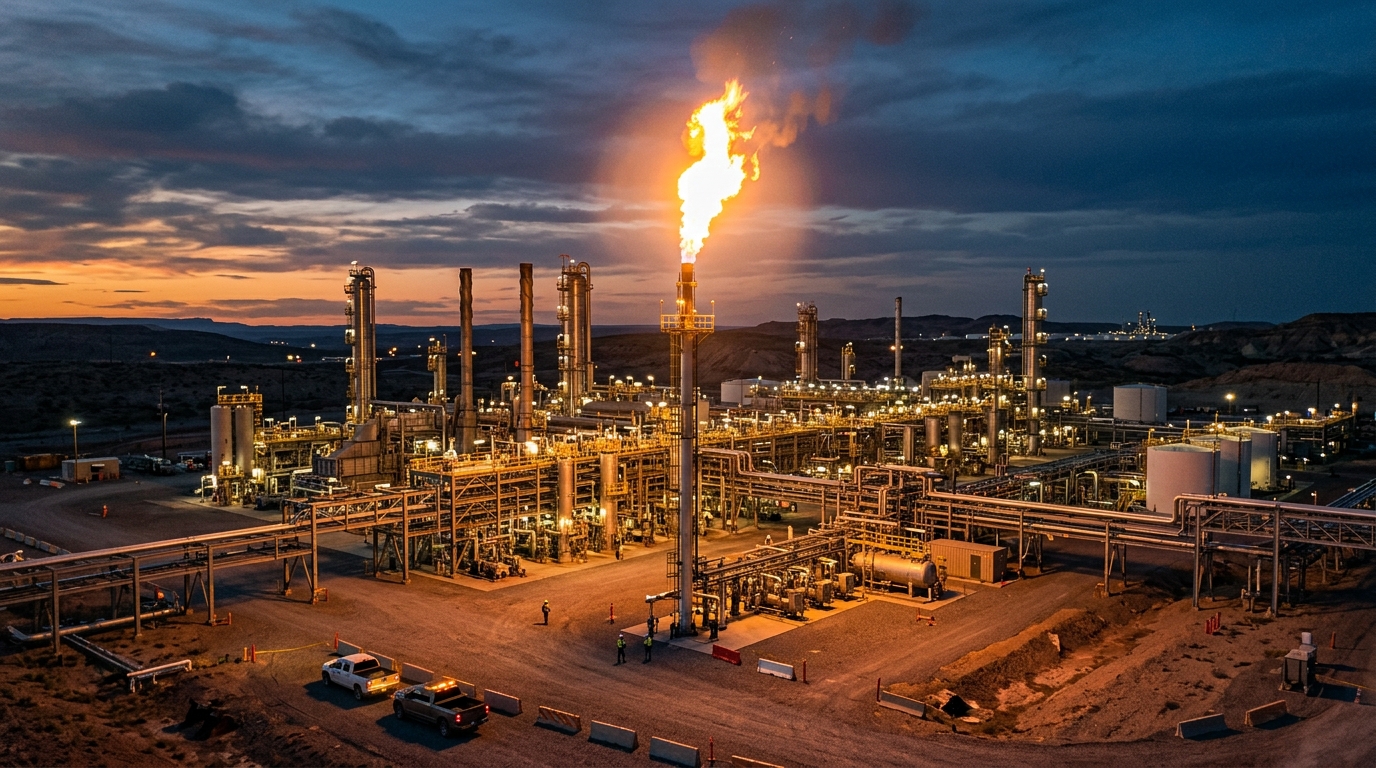
Calorific Value (CV) is the amount of heat energy released when a unit of fuel burns completely under controlled conditions. In simple terms, it measures the energy content of a fuel.
The higher the calorific value, the more energy a fuel contains per unit. However, a higher calorific value does not always mean a fuel is the best choice. Factors such as cost, availability, storage, emissions, and the intended application are equally important when selecting a fuel.
Gross vs. Net Calorific Value
There are two commonly used ways of measuring calorific value:
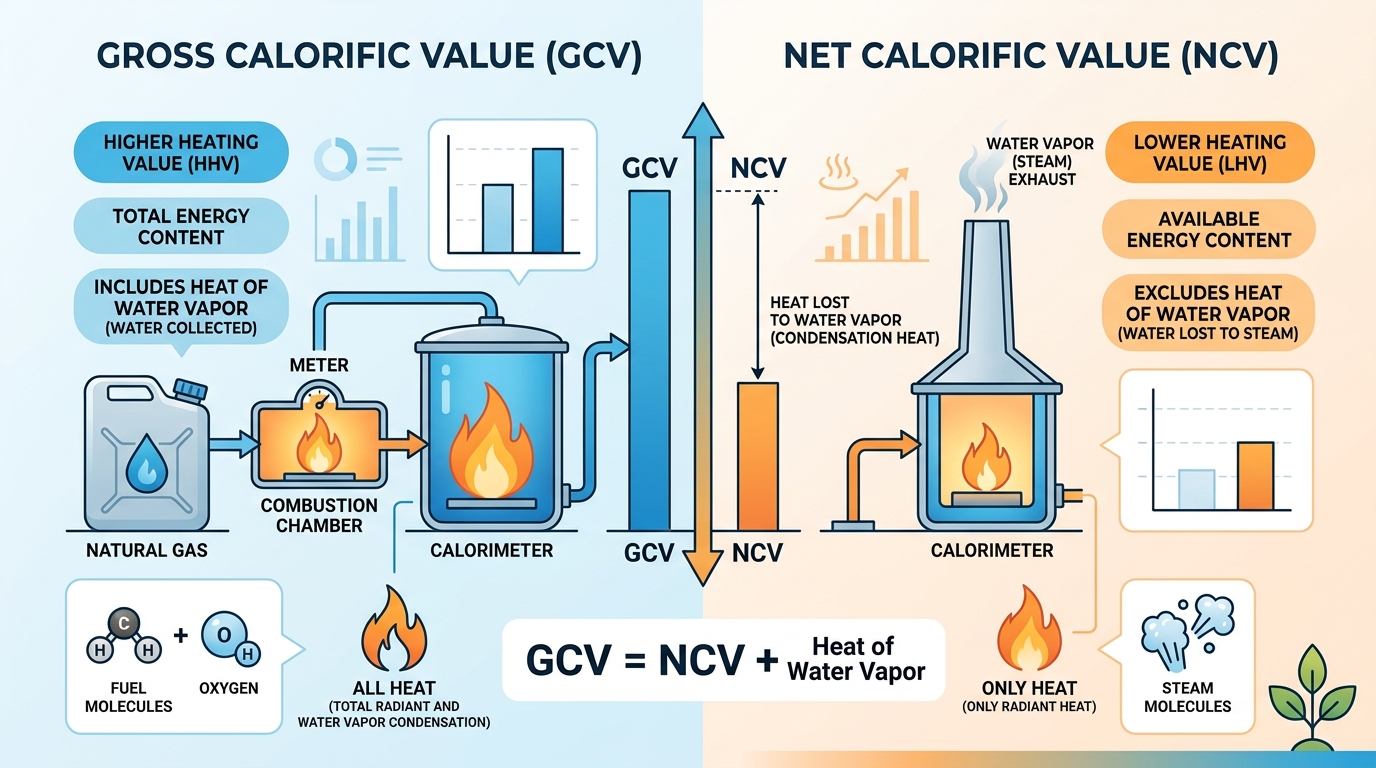
Gross Calorific Value (GCV)
Gross Calorific Value represents the total heat released during complete combustion, including the heat that can be recovered from water vapor produced during the process.
This measurement is useful for laboratory testing and theoretical comparisons because it accounts for all available energy.
Net Calorific Value (NCV)
Net Calorific Value measures the usable heat after excluding the energy contained in water vapor.
Since most practical systems do not recover this heat, NCV is generally the more useful value for real-world engineering calculations and energy planning.
Typical Calorific Values of Common Fuels
Below are approximate calorific values for several commonly used fuels:
| Fuel | Approximate Calorific Value |
| CNG (Methane-rich Natural Gas) | 37–39 MJ/m³ |
| LNG | 37–39 MJ/m³* |
| Propane | 93 MJ/m³ |
| Butane | 121 MJ/m³ |
| Diesel | 45 MJ/kg |
*Note: These values may be expressed using different measurement bases depending on industry standards, so they should not always be compared directly.
While these figures provide useful insight, selecting the right fuel involves much more than simply choosing the one with the highest number.
Why Calorific Value Matters
Choosing a fuel based solely on its calorific value can lead to poor decisions. The best fuel is the one that delivers the right balance of efficiency, performance, environmental impact, and cost for its intended application.
Let’s look at how this applies across different sectors.
Power Generation
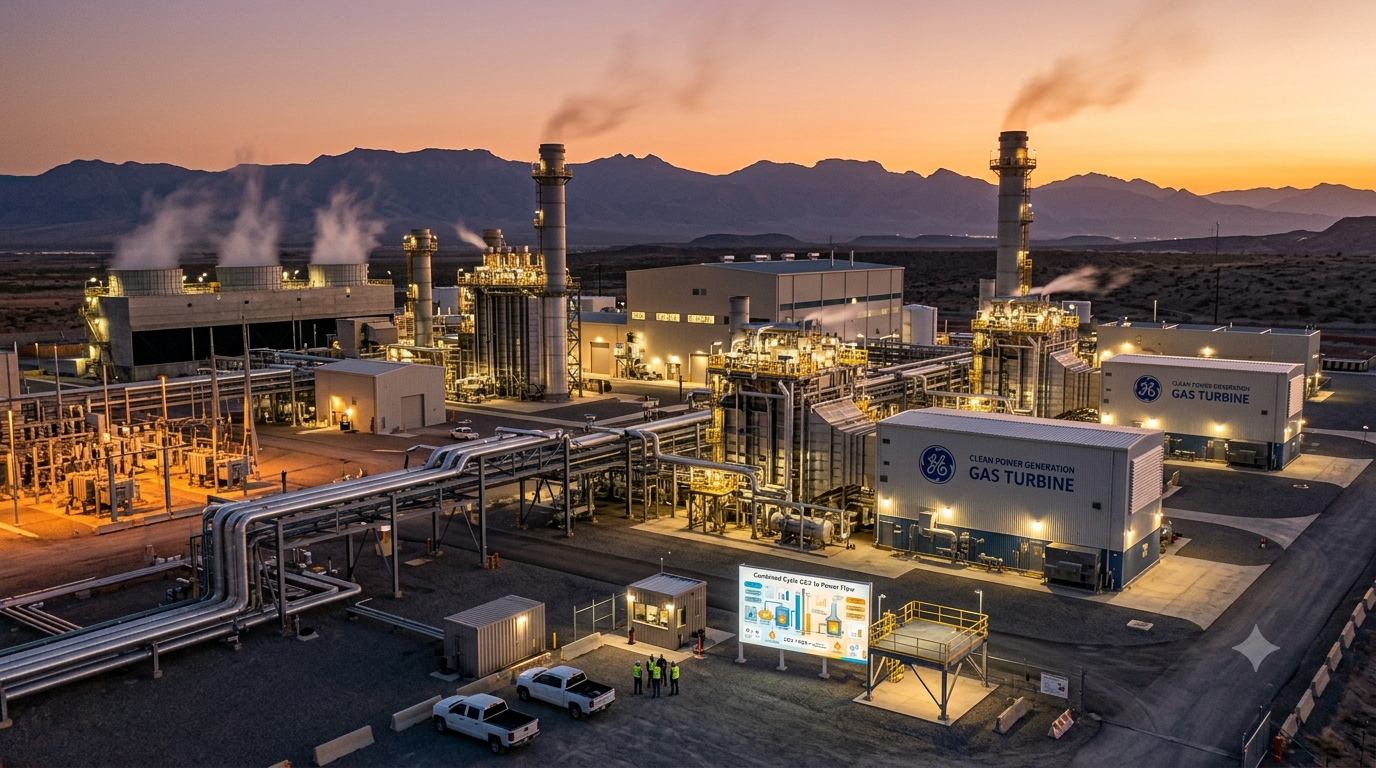
Power plants require fuels that burn consistently and cleanly over long operating periods.
Although methane-rich natural gas has a lower calorific value than propane or butane, it provides stable combustion, produces fewer emissions, and reduces maintenance requirements for turbines and generators.
These advantages make natural gas one of the preferred fuels for modern power generation.
Industrial Heating
Industrial operations such as furnaces, kilns, boilers, and drying systems often require high flame temperatures and reliable heat output.
Propane and LPG deliver higher heat intensity, making them suitable for applications requiring concentrated heat.
For many large-scale industrial processes, however, LNG offers an attractive balance between clean combustion, consistent performance, fuel availability, and operating costs.
The right choice ultimately depends on the specific process requirements and economic considerations.
Transportation
In the transportation sector, fuel selection extends beyond energy content.
Although CNG has a lower calorific value than traditional liquid fuels, it offers significant advantages, including:
- Lower operating costs
- Reduced greenhouse gas emissions
- Cleaner engine operation
- Lower maintenance requirements for many fleets
For commercial fleet operators, these benefits can translate into substantial long-term savings while supporting sustainability goals.

Household Cooking
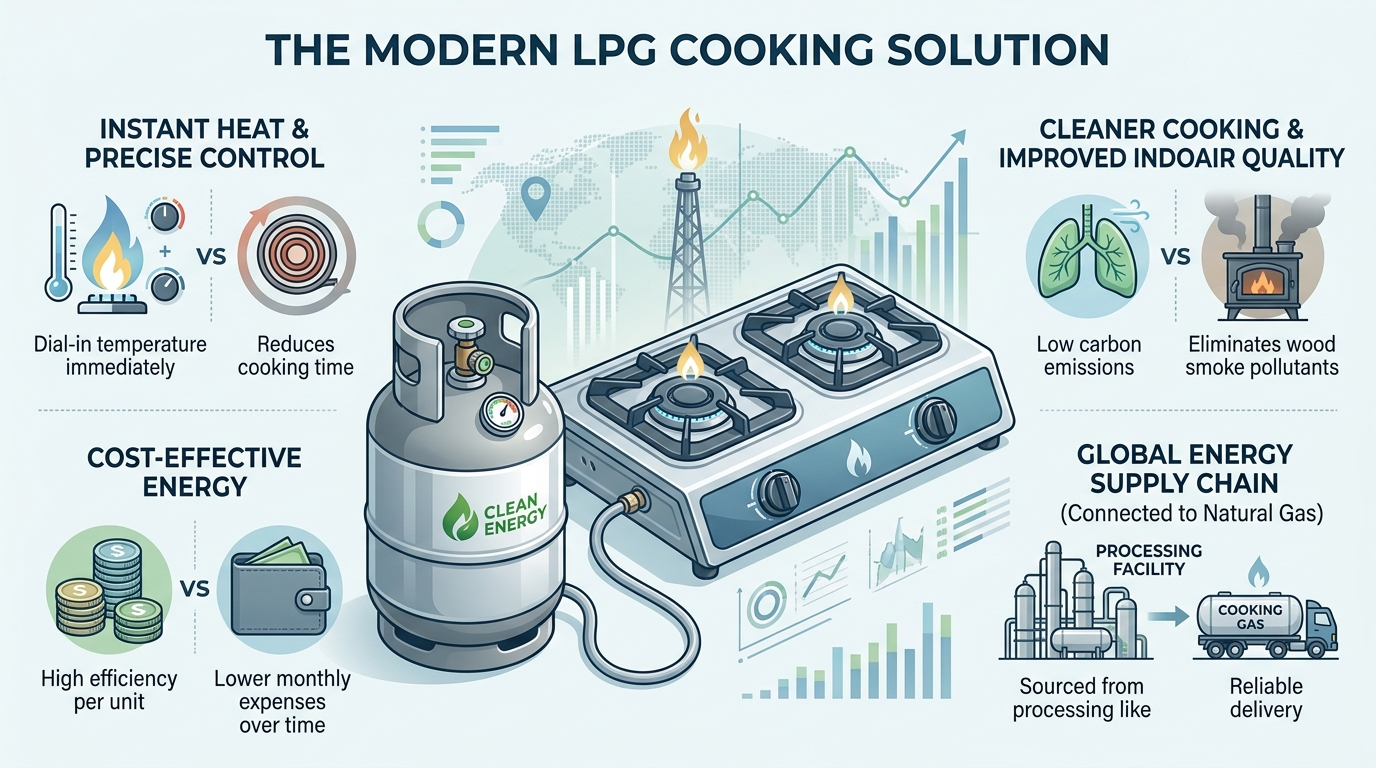
For millions of households, particularly across Nigeria, LPG remains a popular cooking fuel.
Its relatively high calorific value allows it to produce strong, consistent heat, making cooking faster and more efficient.
In addition, LPG’s ability to be safely stored and transported in cylinders makes it convenient for homes that are not connected to natural gas pipeline networks.
Looking Beyond the Numbers
Calorific value is an important measure of fuel quality, but it should never be viewed in isolation.
When comparing fuels, decision-makers should also consider:
- Fuel availability
- Cost per unit of useful energy
- Storage and transportation requirements
- Equipment compatibility
- Environmental impact
- Operational efficiency
- Maintenance requirements
Two fuels may have similar purchase prices, yet one may deliver significantly more usable energy or lower operating costs over time.
Understanding these factors leads to smarter investments and more efficient energy systems.
Conclusion
Calorific Value is much more than a technical measurement—it is a key indicator of how effectively a fuel can perform in real-world applications.
Whether you’re generating electricity, operating industrial equipment, managing a transportation fleet, or choosing the best cooking fuel for your home, understanding calorific value helps you make informed energy decisions.
By looking beyond the numbers and considering efficiency, economics, and sustainability together, businesses and consumers can select fuels that deliver the greatest overall value.
Need Expert Guidance?
Choosing the right fuel isn’t just about selecting the highest calorific value—it’s about finding the best solution for your operational needs.
If you’re looking for reliable natural gas solutions or need guidance on selecting the right energy option for your business, our team is ready to help you make informed, cost-effective decisions.