
Nigeria has long been recognized as one of Africa’s most resource-rich nations, particularly in natural gas. For decades, discussions surrounding the country’s gas sector have focused on reserves, export opportunities, and untapped potential.
However, a careful reading of the NNPC Limited Gas Master Plan (GMP) 2026 reveals a significant shift in perspective.
The question is no longer whether natural gas is important to Nigeria’s future—that has already been established. The more pressing question is where value will be created over the next decade.
The Gas Master Plan provides a compelling answer: Nigeria’s future gas economy will be driven not merely by discovering and producing gas, but by building the infrastructure and commercial frameworks needed to deliver it to consumers.
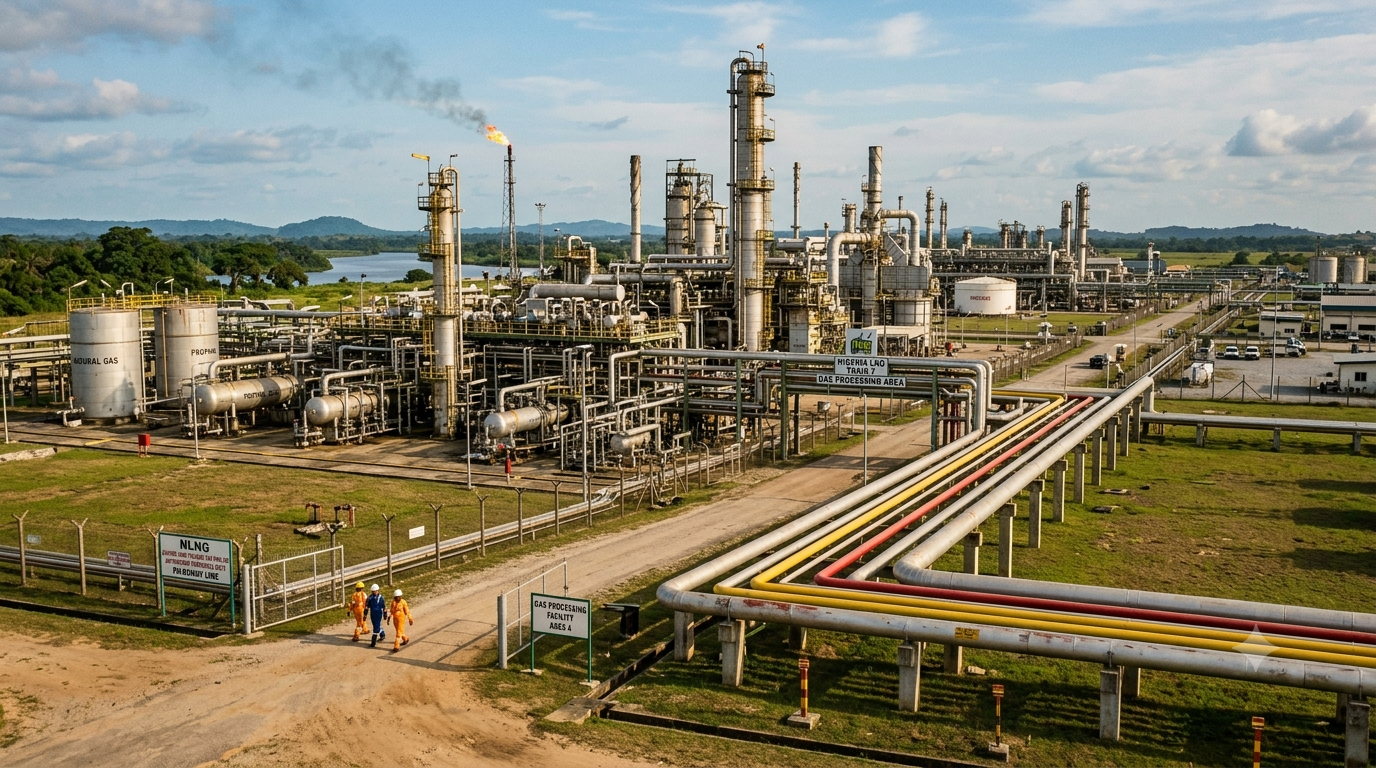
A Shift in Nigeria’s Gas Narrative
Historically, Nigeria’s gas conversation has been dominated by two themes:
- Proven gas reserves
- Export potential
While both remain important, the Gas Master Plan 2026 acknowledges a reality that industry stakeholders have recognized for years: gas reserves alone do not create economic value.
Without adequate infrastructure, processing capabilities, transportation networks, and reliable demand centers, gas remains stranded underground.
The document is refreshingly direct in identifying the country’s primary constraints:
- Infrastructure gaps
- Commercial misalignment
- Financing challenges
- Execution risks
This shift from resource abundance to practical implementation represents one of the most important takeaways from the plan.
The Rise of a Midstream-First Strategy
Perhaps the clearest message from the Gas Master Plan is that Nigeria’s gas future will be built on a midstream-first approach.
For years, midstream assets—processing plants, pipelines, storage facilities, and distribution networks—were viewed primarily as supporting infrastructure. The GMP changes that perspective entirely.
Today, these assets are the foundation of a functioning gas economy.
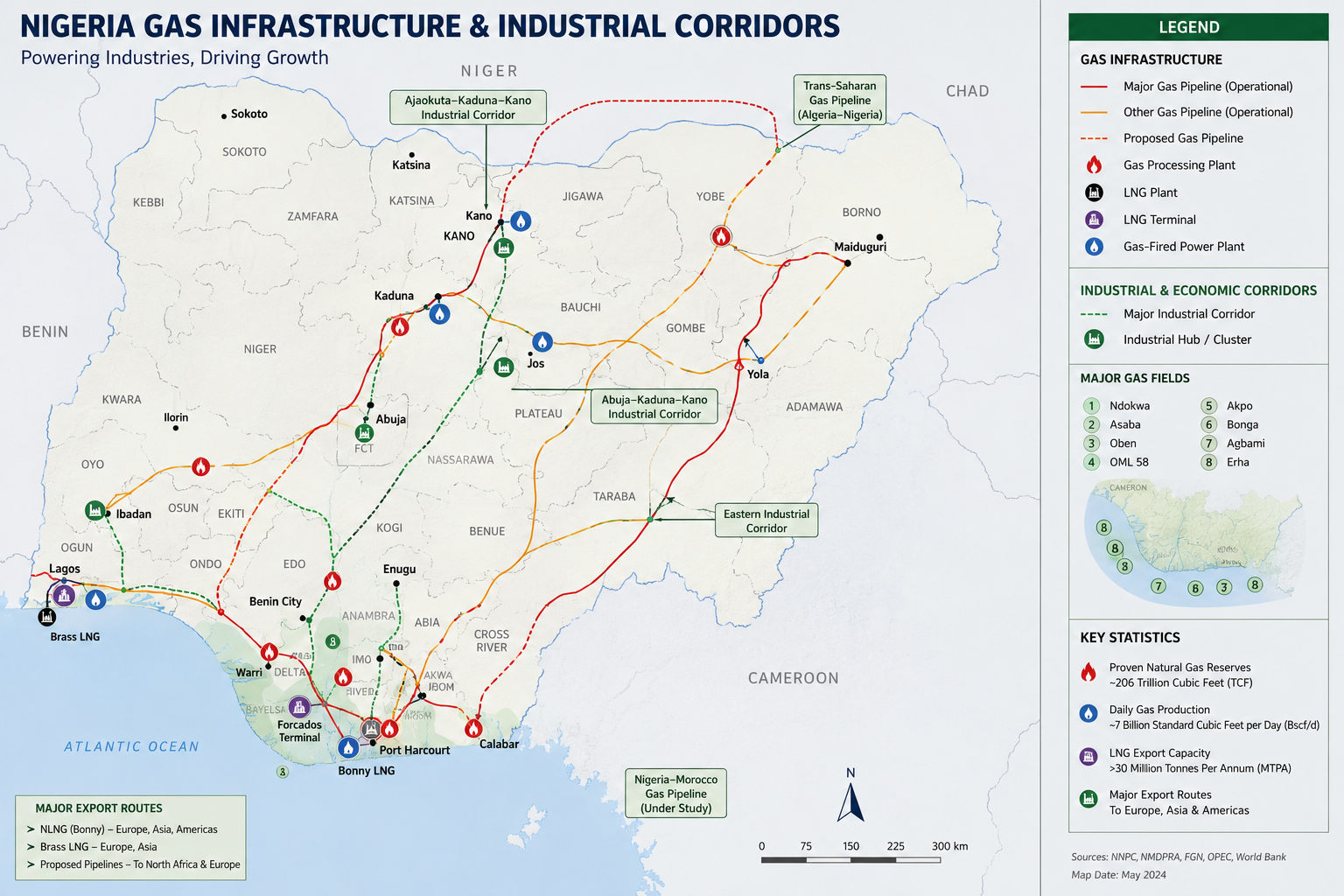
Key midstream components include:
- Gas processing facilities
- Aggregation hubs
- Pipeline transportation networks
- Distribution infrastructure
- Storage and logistics systems
Without these systems in place:
- Upstream gas production remains stranded.
- Power plants operate below capacity.
- Industrial consumers face unreliable supply.
- Domestic markets struggle to scale.
The implication is clear: future investment opportunities will increasingly center on infrastructure that connects producers to end users.

Domestic Demand Is No Longer Secondary
Another notable shift in the Gas Master Plan is how domestic demand is positioned.
Traditionally, export markets received significant attention due to their foreign exchange potential. The GMP, however, recognizes that sustainable growth requires strong domestic consumption.
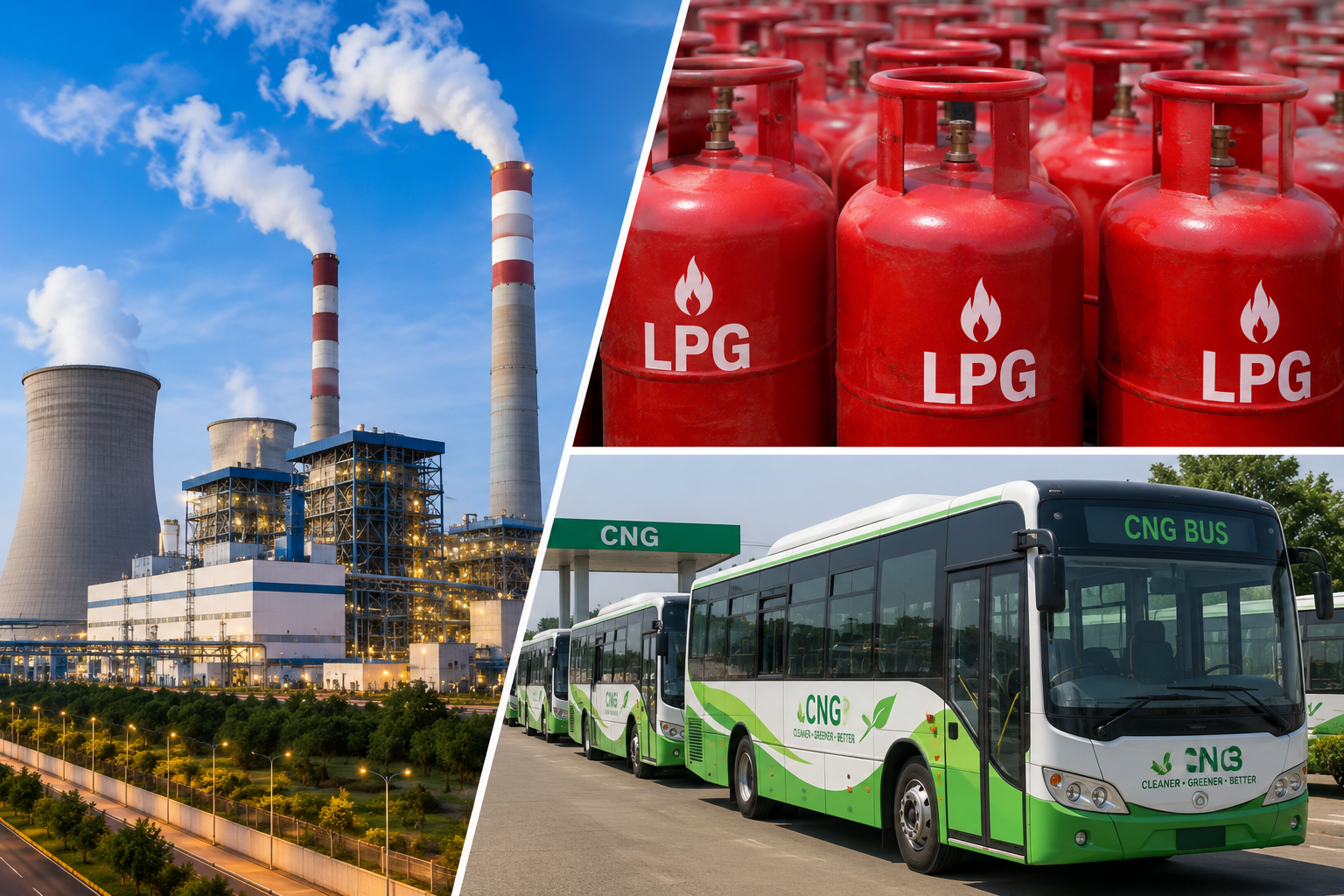
The plan identifies several key demand centers:
- Power generation
- Industrial manufacturing
- Liquefied Petroleum Gas (LPG)
- Compressed Natural Gas (CNG)
- Commercial and residential consumers
Rather than treating these sectors as secondary markets, the document presents them as essential pillars of Nigeria’s long-term gas strategy.
This is an important development because domestic demand provides:
- Market stability
- Long-term revenue opportunities
- Improved energy access
- Industrial development
- Economic diversification
As these markets continue to grow, they will play an increasingly important role in supporting investment across the gas value chain.
The Evolving Role of NNPC Limited
The Gas Master Plan also offers insight into how NNPC Limited envisions its role in the future gas economy.
Rather than positioning itself solely as an operator, the organization is increasingly presented as:
- An infrastructure anchor
- A gas aggregator
- A facilitator of investment
- A risk-sharing partner
This distinction is significant.
By creating an environment where public and private stakeholders can collaborate effectively, the plan opens the door for broader participation across the sector.
For investors, developers, and energy companies, this signals a move toward a more inclusive ecosystem where private capital can contribute meaningfully to national energy objectives.
Such partnerships will likely be critical in addressing the scale of infrastructure development required over the coming years.
Addressing Commercial Realities
One of the strengths of the Gas Master Plan is its acknowledgment of the commercial realities facing the industry.
Too often, policy documents focus exclusively on ambition while overlooking the practical challenges associated with implementation.
The GMP takes a more balanced approach by recognizing the importance of:
- Cost-reflective pricing
- Bankable projects
- Long-term supply agreements
- Commercial sustainability
- Investment-friendly frameworks
These factors are not minor details—they are prerequisites for attracting investment and ensuring project viability.
A gas project may be technically feasible, but without appropriate pricing structures and commercial agreements, it is unlikely to achieve long-term success.
This emphasis on commercial discipline is one of the document’s most encouraging aspects.

Where Future Value Will Be Created
For companies operating in Nigeria’s energy sector, the implications of the Gas Master Plan are substantial.
The greatest opportunities over the next decade are unlikely to come solely from discovering new reserves. Instead, value creation will increasingly depend on connecting supply with demand.
Areas likely to see significant growth include:
- Gas processing facilities
- Industrial gas supply projects
- Pipeline and transportation infrastructure
- Power generation partnerships
- LPG distribution networks
- CNG transportation corridors
- Integrated gas-to-industry developments
Projects that combine production, processing, transportation, and end-use applications are best positioned to align with Nigeria’s national energy strategy.
In many ways, the country’s future gas success will be determined not by the quantity of molecules produced, but by how effectively those molecules reach consumers.
The Gas Master Plan as an Investment Blueprint
It is tempting to view the Gas Master Plan 2026 solely as a policy document.
That would be a mistake.
At its core, the plan serves as a roadmap for infrastructure development, private sector participation, and long-term investment opportunities.
Stakeholders who approach it from a purely regulatory perspective may overlook its broader significance.
Those who see it as an investment blueprint, however, will recognize where the country’s energy priorities—and future opportunities—are increasingly aligned.
Conclusion
Nigeria’s gas debate has evolved.
The conversation is no longer centered on whether the country possesses sufficient resources. It is now focused on execution—building the infrastructure, commercial frameworks, and partnerships required to unlock value across the gas value chain.
The NNPC Limited Gas Master Plan 2026 makes one message abundantly clear:
The next decade of gas value will not come from discovering molecules. It will come from connecting molecules to demand.
For investors, operators, and policymakers alike, understanding this shift will be critical to navigating the future of Nigeria’s energy landscape.
Looking Ahead
As Nigeria continues to pursue energy security, industrial growth, and economic diversification, the success of its gas strategy will depend on one factor above all else: execution.
Those who recognize this today will be better positioned to participate in the opportunities of tomorrow.