
Nigeria possesses one of the largest natural gas reserves in the world, yet its production levels remain significantly below its potential.
According to the NNPC Gas Master Plan (GMP) 2026, the country holds approximately 209 trillion cubic feet (Tcf) of proven gas reserves, with estimates suggesting that figure could eventually rise to as much as 600 Tcf. Roughly 48% of these reserves are associated gas, while 52% are non-associated gas.
Despite ranking among the top ten nations globally in terms of gas reserves, Nigeria continues to lag behind in actual production.
The question is no longer whether Nigeria has enough gas.
The real challenge is how quickly and efficiently the country can transform those reserves into deliverable molecules that power industries, generate electricity, and drive economic growth.
The NNPC Gas Master Plan 2026 proposes a compelling answer: a hub-based gas development model.
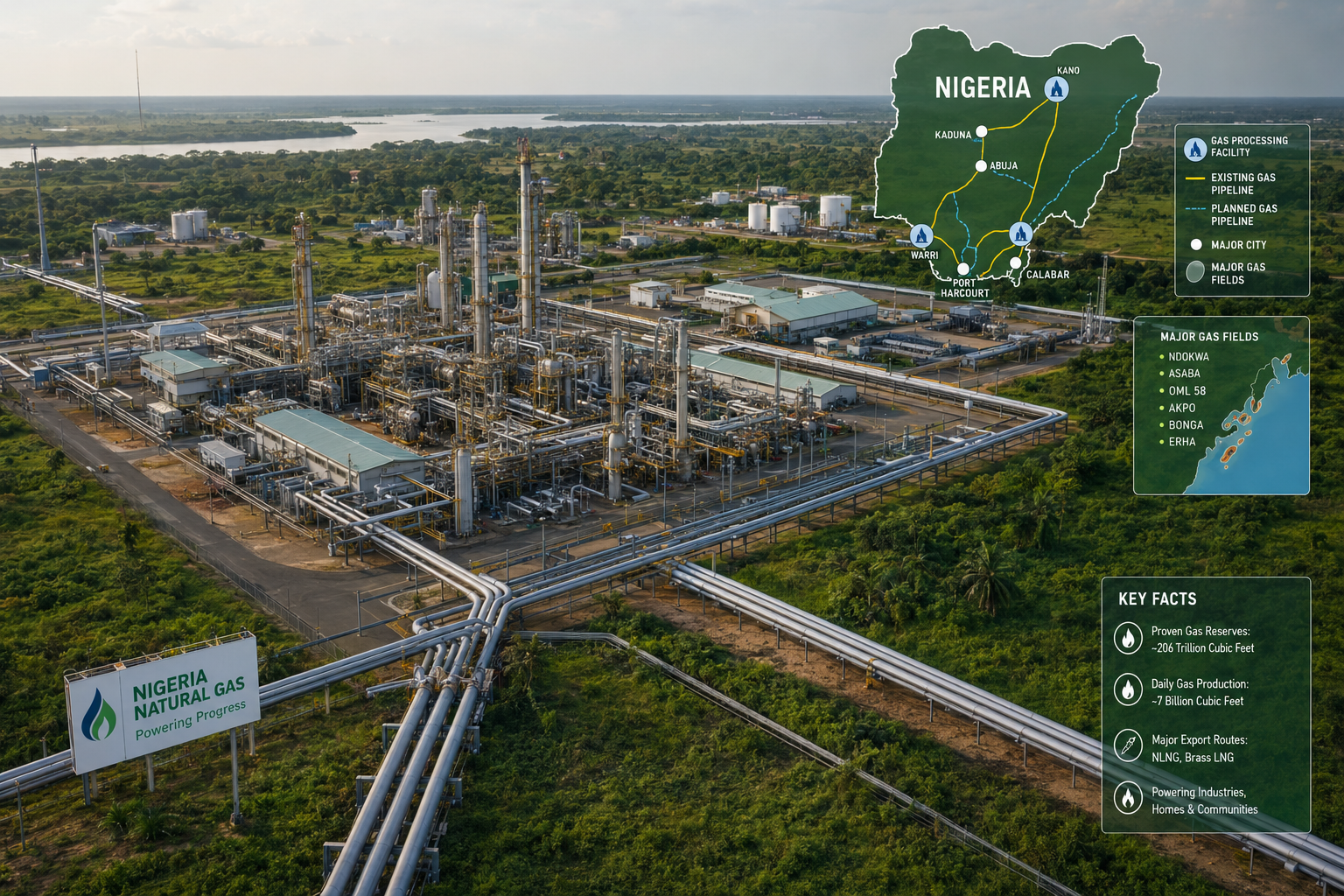
Nigeria’s Gas Challenge Is Not Geology
For many years, discussions around Nigeria’s gas sector have focused on exploration and reserve growth.
However, the GMP 2026 makes an important distinction:
Nigeria’s gas problem is not geology. It is infrastructure, execution, and coordination.
Significant volumes of gas remain stranded due to:
- Limited processing capacity
- Insufficient transportation infrastructure
- Fragmented field development
- Financing constraints
- Project execution challenges
As a result, possessing vast reserves has not automatically translated into increased production or economic value.
Recognizing this reality, the Gas Master Plan shifts its focus from resource discovery to infrastructure optimization.
Understanding the Hub-Based Development Model
At the center of the Gas Master Plan is the development of 23 strategic gas hubs across the country.
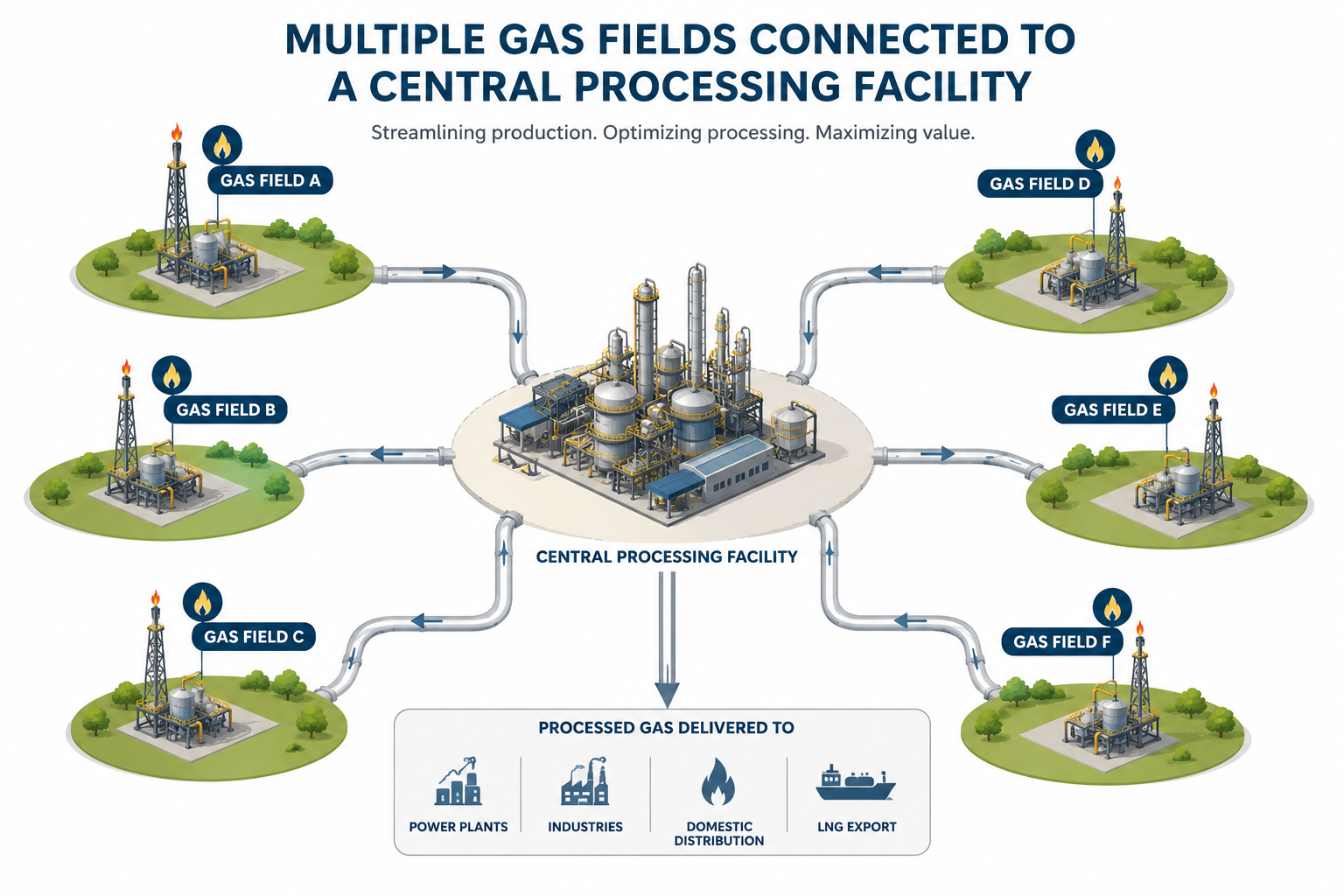
Rather than developing gas assets on a field-by-field basis, the hub model clusters multiple assets around shared infrastructure.
This includes:
- Central Processing Facilities (CPFs)
- Pipeline networks
- Compression systems
- Storage infrastructure
- Transportation corridors
The objective is simple: maximize efficiency while minimizing duplication.
By consolidating infrastructure requirements, Nigeria can accelerate production growth and improve project economics.
Why Gas Hubs Matter
The benefits of a hub-based approach extend beyond operational efficiency.
Key advantages include:
- Reduced infrastructure duplication
- Lower capital expenditure per project
- Shared processing facilities
- Faster project development timelines
- Improved economies of scale
- Increased investor confidence
This model has been successfully applied in several mature energy markets and is increasingly viewed as a practical pathway for unlocking stranded gas resources.
For Nigeria, it represents a transition from isolated developments to an integrated gas ecosystem.
The Seven High-Readiness Hubs
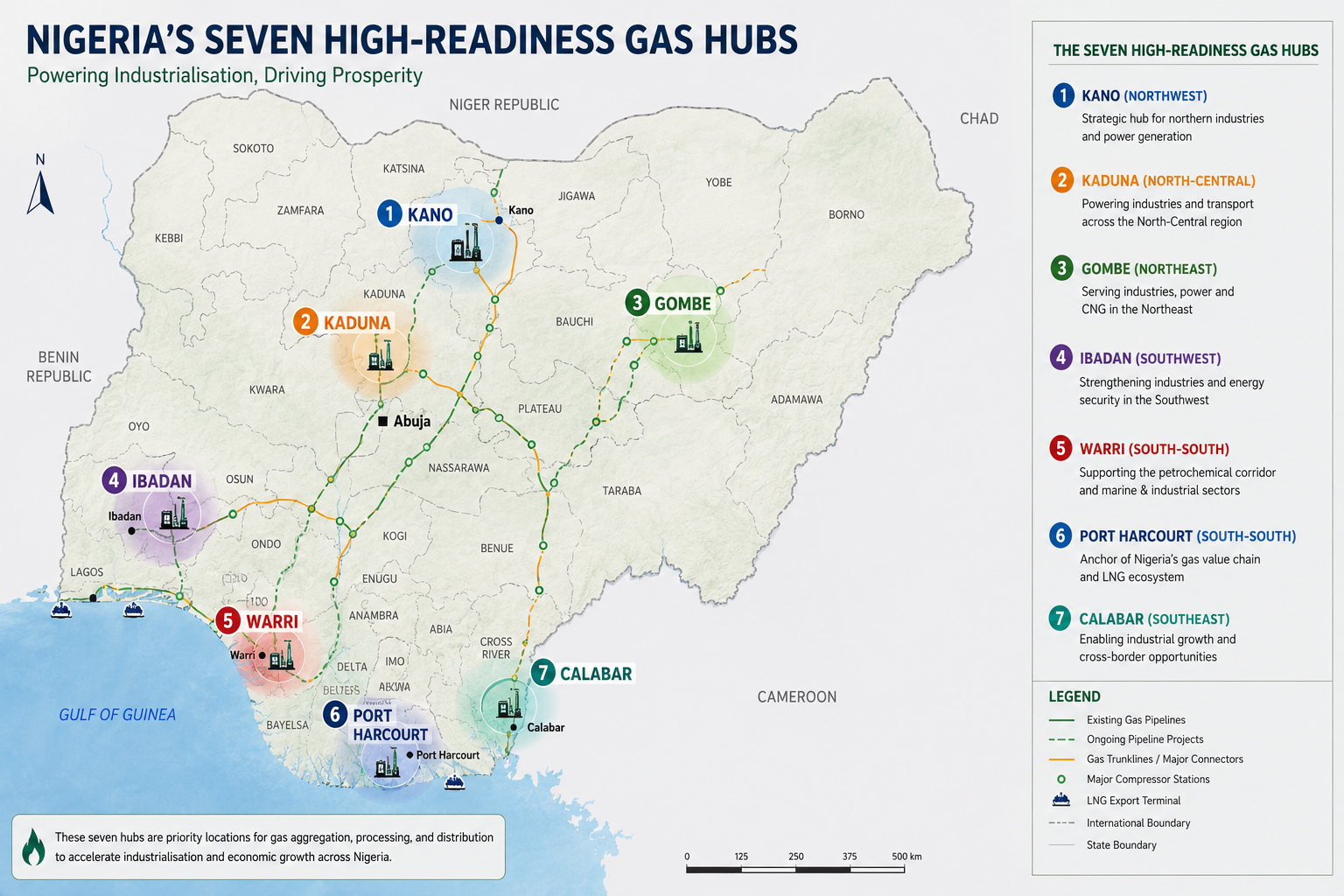
Among the 23 identified hubs, seven have been designated as high-readiness hubs.
Collectively, these hubs account for approximately 60% of Nigeria’s proven 2P reserves, making them critical to achieving the country’s production targets.
Importantly, these projects are not conceptual.
They have been identified as priority candidates for Central Processing Facility expansion, allowing additional volumes to be brought online in the shortest possible timeframe.
Key Expansion Opportunities
Several hubs stand out because of their existing production capacity and significant expansion potential.
Gbaran–Soku–Obagi–OBOB
- Current production: Approximately 5.2 Bcf/d
- Expansion potential: Approximately 1.1 Bcf/d
This hub already represents one of Nigeria’s most important gas-producing corridors and remains central to future supply growth.
Utorogu–Ughelli–Okpokonou–Iseni–Brass
- Current production: Approximately 600 MMscf/d
- Potential expansion: Up to 1.2 Bcf/d (including NAG-3)
The scale of potential growth positions this hub as another critical component of the national gas strategy.
Assa North
- Current production: Approximately 550 MMscf/d
- Additional potential: Approximately 600 MMscf/d
Assa North continues to attract significant attention due to its strategic importance and relatively near-term development prospects.
[Insert Image: Modern gas processing plant with pipelines and compression infrastructure.]
Unlocking Stranded Gas Through New Central Processing Facilities
While several hubs are positioned for expansion, others require entirely new Central Processing Facilities (CPFs) before development can proceed.
The GMP identifies six hubs requiring new CPF investments.
Among the most notable are:
Anyala–Funiwa–Ofrima–Madu
- Proposed processing capacity: Approximately 500 MMscf/d
Zabazaba–Agbami–Nwa Doro
- Proposed processing capacity: Approximately 600 MMscf/d
These projects are particularly important because they have the potential to unlock substantial volumes of currently stranded gas.
By investing in shared processing infrastructure, Nigeria can bring these resources into the domestic and export markets more efficiently.
The Investment Case for Gas Hubs
From an investment perspective, the hub strategy presents several compelling advantages.
Investors and project developers stand to benefit from:
- Lower unit development costs
- Reduced operating expenses
- Shared infrastructure across multiple assets
- Accelerated time to first gas
- Improved project bankability
Infrastructure-led development also tends to attract additional private capital, particularly when governments provide clear policy direction and long-term support.
This alignment between public policy and private investment will be essential if Nigeria is to achieve its production ambitions.

The Risks Cannot Be Ignored
Despite its advantages, the hub strategy is not without challenges.
The Gas Master Plan acknowledges several risks that could impact implementation:
- Tight execution timelines between 2027 and 2030
- Significant capital requirements
- Deepwater development complexities
- Security concerns in key operating regions
- Delivery and infrastructure risks
These challenges underscore a recurring theme throughout the GMP:
Execution matters more than ambition.
History has shown that large infrastructure projects often succeed or fail based on implementation discipline rather than strategic intent.
An Evolution of Nigeria’s Gas Strategy
The hub-and-CPF model represents a significant evolution from the 2008 Nigerian Gas Master Plan.
While the earlier framework emphasized centralized processing, the GMP 2026 adopts a more pragmatic and flexible approach.
It recognizes the realities of today’s operating environment and seeks to optimize development around existing assets, commercial realities, and infrastructure constraints.
In many ways, this shift reflects a broader maturation of Nigeria’s energy strategy—moving from aspirational planning to practical execution.
Can Nigeria Achieve 10 Bcf/d by 2027?
Nigeria’s target of producing 10 billion cubic feet of gas per day (10 Bcf/d) by 2027 is ambitious.
Achieving that objective will require:
- Timely infrastructure deployment
- Successful CPF expansions
- Effective public-private collaboration
- Adequate financing
- Improved security
- Strong project management
If the Gas Master Plan is to succeed, the hub strategy cannot be treated as one initiative among many.
It is the foundation upon which the country’s production targets now rest.
Conclusion
The NNPC Gas Master Plan 2026 sends a clear message: Nigeria’s future gas success will not be determined by the size of its reserves, but by its ability to connect infrastructure, investment, and demand.
The hub-based gas development model offers a practical pathway for unlocking stranded resources, improving project economics, and accelerating production growth.
Yet the success of this strategy will ultimately depend on one thing:
Execution.
The coming years will determine whether the Gas Master Plan becomes another policy document—or the blueprint that defines Nigeria’s next decade of gas development.
Looking Ahead
As Nigeria works toward becoming a leading gas-powered economy, stakeholders across the value chain will be watching closely.
The reserves already exist.
The strategy has been outlined.
The opportunity is substantial.
What remains is the ability to execute at scale.