
When discussing Nigeria’s natural gas ambitions, attention is often focused on reserves, production targets, and investment figures. Yet, one critical component of the gas value chain quietly determines whether those ambitions can become reality: pipeline infrastructure.
A closer look at the NNPC Limited Gas Master Plan (GMP) 2026 reveals that not all pipelines are treated equally. Each pipeline is assigned a specific role within the national gas network, and its status—whether operational, under development, or planned—provides valuable insight into where Nigeria’s greatest execution risks and opportunities lie.
The Gas Master Plan does more than list infrastructure projects. It effectively maps the country’s gas transmission priorities and highlights the dependencies that will determine whether supply reaches demand centers across Nigeria.
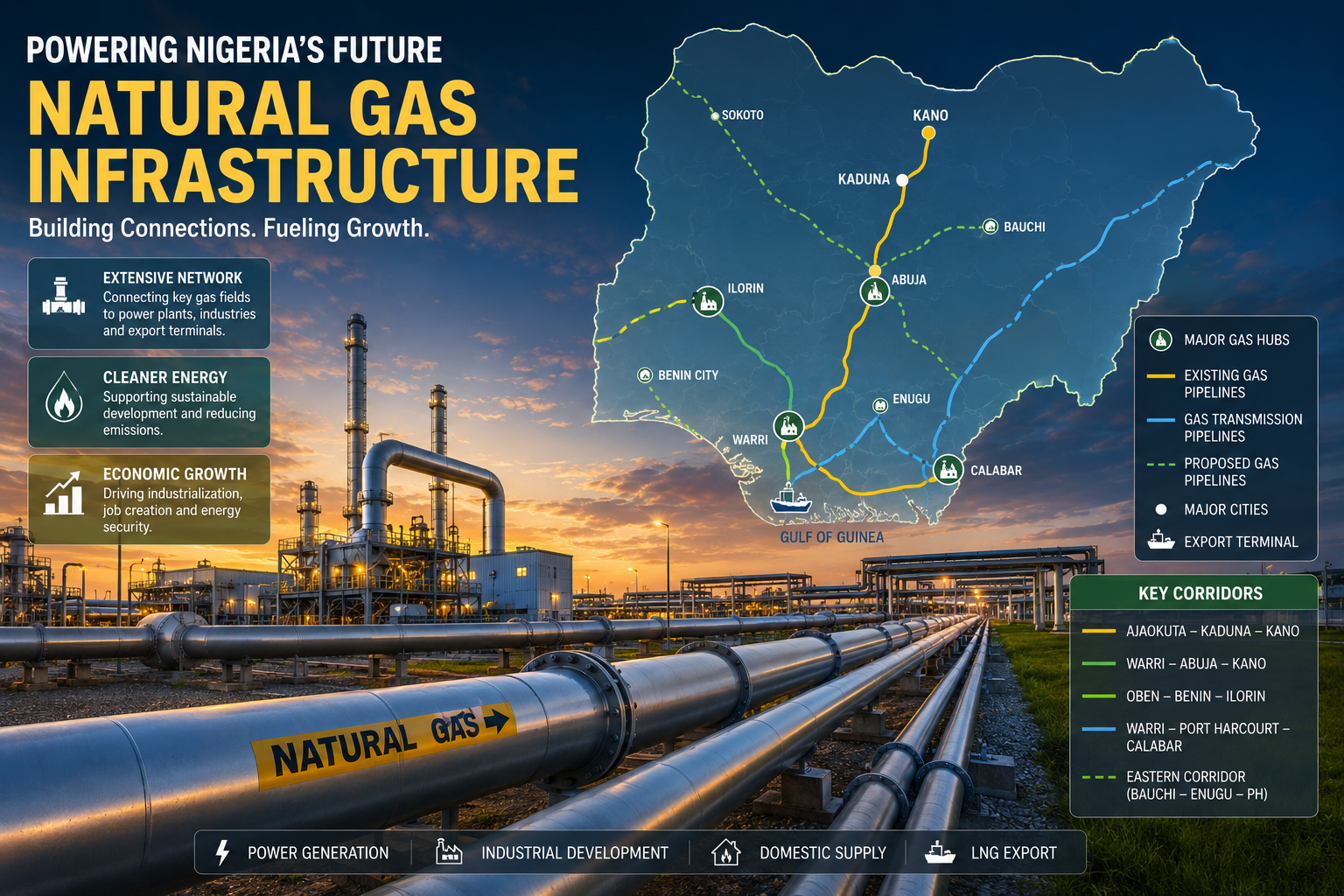
Pipelines Are More Than Infrastructure
Natural gas pipelines serve as the arteries of an energy system. Without them, even the most abundant gas reserves remain stranded.
The GMP presents Nigeria’s pipeline network as a layered system in which different pipelines perform different functions, including:
- Delivering gas to existing demand centers
- Connecting supply regions
- Unlocking new industrial markets
- Increasing network resilience
- Supporting future production expansion
Understanding these roles provides a clearer picture of where the country’s gas ambitions may succeed—or encounter delays.
ELPS: The Operational Backbone Under Pressure
The Escravos–Lagos Pipeline System (ELPS) is arguably one of Nigeria’s most important gas transmission assets.
The Gas Master Plan treats ELPS not as an expansion project, but as an operational backbone that is increasingly under pressure.
Today, ELPS supports multiple demand centers, including:
- Western offshore gas supply
- Power generation facilities in Lagos
- Industrial consumers
- Lekki industrial developments
- Emerging CNG demand clusters
Its growing utilization explains why the proposed ELPS II project is considered essential.
Unlike many infrastructure projects that are designed primarily for growth, ELPS II is positioned as a pressure-relief and system resilience initiative.
Its primary objectives include:
- Reducing network congestion
- Improving supply reliability
- Enhancing operational flexibility
- Supporting future demand growth
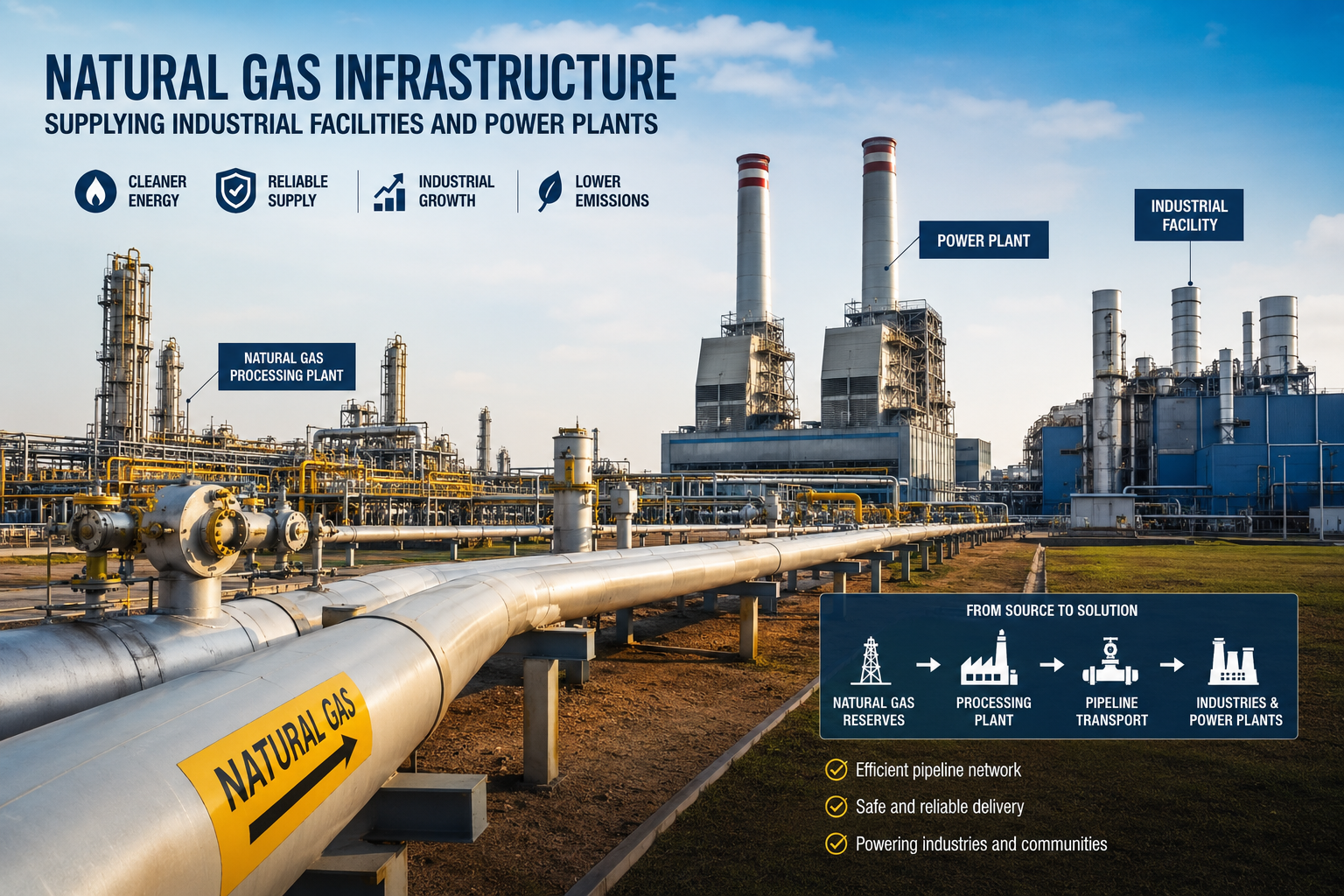
OB3: The East-West Balancer
The Obiafu–Obrikom–Oben (OB3) pipeline occupies a unique position within Nigeria’s gas network.
The GMP identifies OB3 as an infrastructure project that remains under development rather than treating it as an existing operational asset.
This distinction is important.
OB3 serves as the critical east-west balancing pipeline, enabling gas to flow more efficiently across Nigeria’s major supply regions.
Its completion is particularly significant because it facilitates:
- East-west gas transportation
- Supply flexibility across the network
- Improved system integration
- Increased utilization of existing gas assets
One of the most challenging aspects of the project has been infrastructure integration across the River Niger crossing.
Until OB3 is fully operational, Nigeria’s eastern and western gas systems will continue to operate with limited connectivity.
AKK: The Pipeline That Unlocks Demand
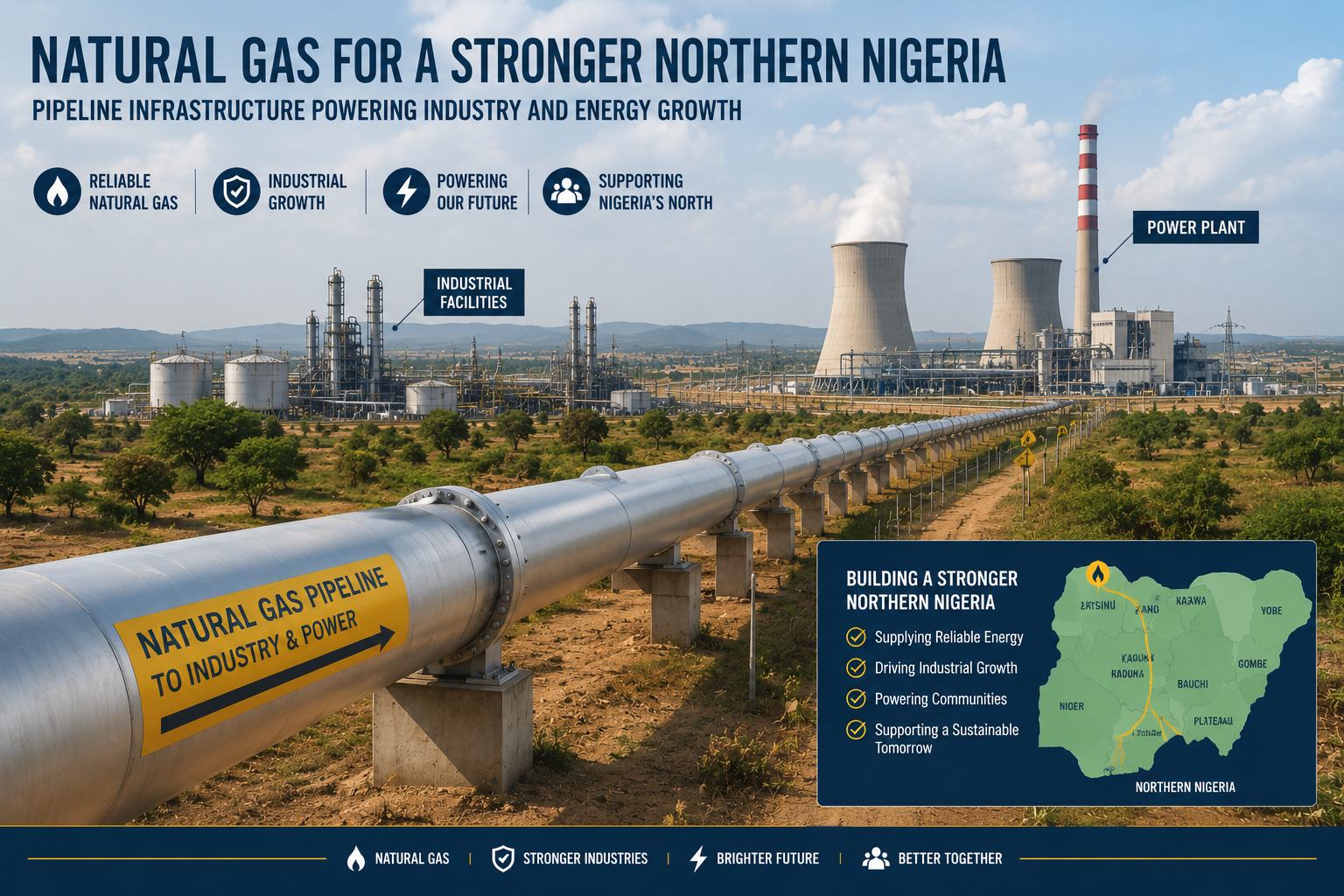
The Ajaokuta–Kaduna–Kano (AKK) pipeline is often discussed as a major infrastructure project, but the Gas Master Plan assigns it a role that extends beyond gas transportation.
Rather than viewing AKK primarily as a supply project, the GMP positions it as a demand enabler.
Its success directly impacts the viability of:
- Northern power generation projects
- Industrial gas utilization
- Manufacturing developments
- Future commercial gas markets
In many respects, AKK functions as a commercial trigger for northern Nigeria’s gas economy.
Without its timely completion:
- Projected gas demand in northern Nigeria could fail to materialize.
- Upstream investment decisions may be delayed.
- Industrial development opportunities may be postponed.
This makes AKK one of the most strategically important infrastructure projects in the country’s gas sector.
Connector Pipelines: The Infrastructure That Enables Expansion
Some of the most important infrastructure projects identified in the Gas Master Plan receive comparatively little public attention.
Connector pipelines—including B-NAG, GTS-4, and OCGS—perform enabling functions that are critical to the broader gas network.
B-NAG
B-NAG is presented as a planned evacuation pipeline that supports future Central Processing Facility (CPF) expansions.
Its importance lies in its ability to:
- Evacuate non-associated gas supplies
- Enable new production volumes
- Support infrastructure integration
Without adequate evacuation infrastructure, gas production capacity cannot be fully utilized.
GTS-4 and OCGS
The GMP identifies GTS-4 and OCGS as network reinforcement projects.
Their value extends beyond increasing transportation capacity. These pipelines provide:
- Improved routing flexibility
- Reduced dependence on single transmission corridors
- Greater operational resilience
- Enhanced system reliability
Connector pipelines may not attract the same level of public attention as flagship projects, but they often determine whether supply expansions can achieve their intended outcomes.
Understanding Nigeria’s Gas Network Dependencies
One of the most insightful aspects of the Gas Master Plan is the way it sequences infrastructure development.
The document implicitly categorizes pipeline projects into four groups:
Operational but Under Pressure
- ELPS
Structural Enablers Still Under Development
- OB3
Demand Activation Infrastructure
- AKK
Expansion and Connectivity Projects
- B-NAG
- GTS-4
- OCGS
This layered approach reflects a realistic understanding of how infrastructure projects interact within the broader gas ecosystem.
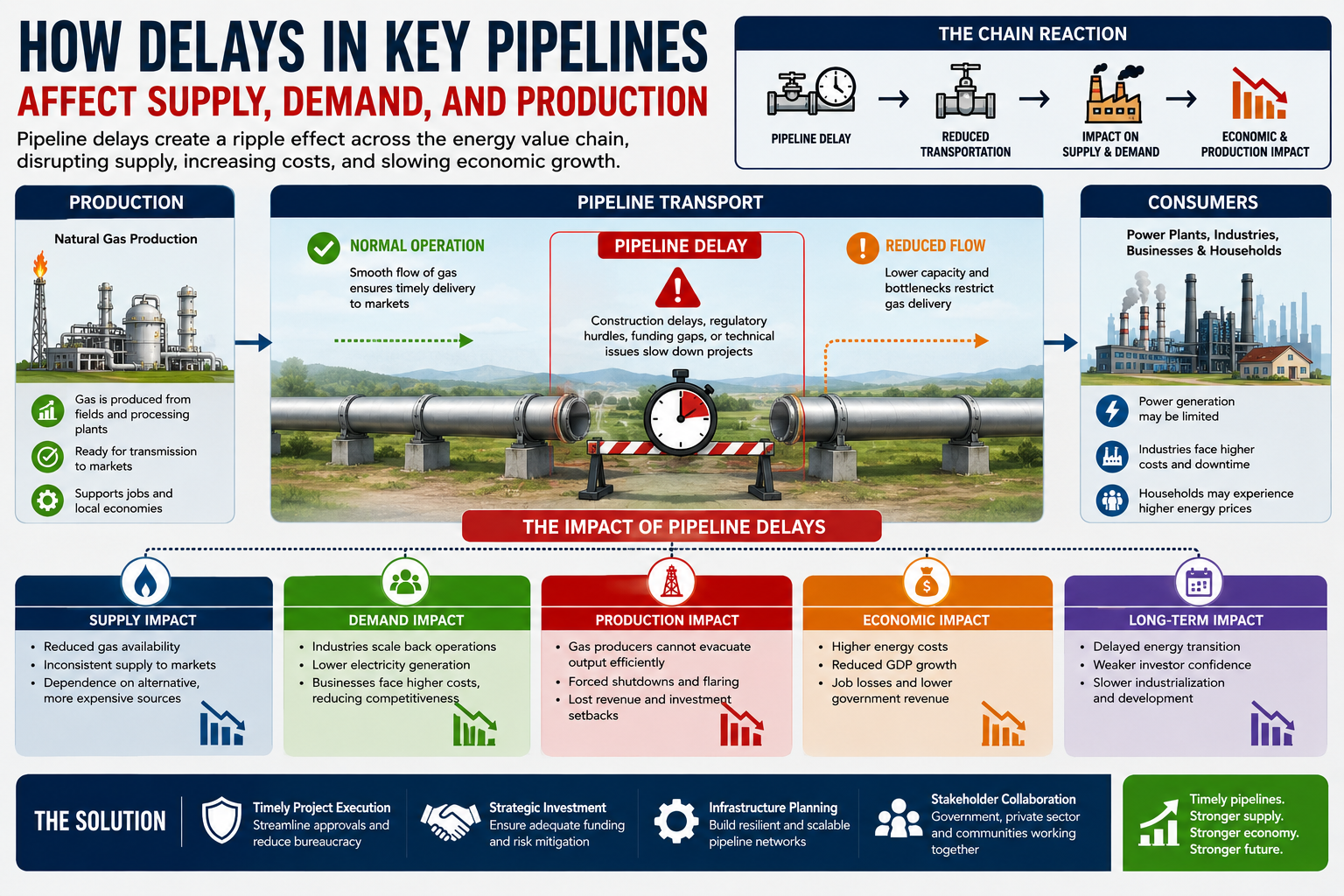
What Happens If Critical Projects Are Delayed?
The Gas Master Plan makes it clear that pipeline execution timelines matter.
Potential consequences include:
If ELPS II is delayed:
- Existing congestion challenges worsen.
If OB3 is delayed:
- East-west balancing capabilities remain constrained.
If AKK is delayed:
- Northern industrial and power demand may not materialize as projected.
If connector pipelines are delayed:
- Central Processing Facility expansions could underperform.
These risks illustrate why pipeline infrastructure remains one of the most important determinants of success for Nigeria’s gas strategy.
The Gas Master Plan as a Stress Map
Viewed collectively, the pipeline section of the Gas Master Plan functions as more than an infrastructure inventory.
It is, in many ways, a stress map of Nigeria’s gas transmission network.
The document highlights:
- Existing capacity constraints
- Infrastructure dependencies
- Demand activation mechanisms
- Network resilience requirements
- Future expansion pathways
Understanding these relationships provides valuable insight for investors, policymakers, and industry stakeholders seeking to identify both risks and opportunities within the sector.
Conclusion
Nigeria’s gas ambitions are closely tied to the successful delivery of its pipeline infrastructure.
The country’s future gas economy will not be determined solely by reserve size or production targets. It will depend on how effectively gas molecules are transported from supply hubs to demand centers.
The NNPC Limited Gas Master Plan 2026 demonstrates that some pipelines are already carrying significant operational burdens, while others are essential for unlocking future growth.
The lesson is straightforward:
Infrastructure sequencing matters.
Planning more pipelines is important, but understanding which pipelines enable supply, activate demand, relieve congestion, and strengthen resilience is what will ultimately determine the success of Nigeria’s gas strategy.
Looking Ahead
As Nigeria moves toward becoming a gas-powered economy, pipeline infrastructure will remain one of the sector’s most important investment themes.
The future of the country’s gas industry will depend not only on how much infrastructure is built—but on building the right infrastructure at the right time.